
November 13, 2026
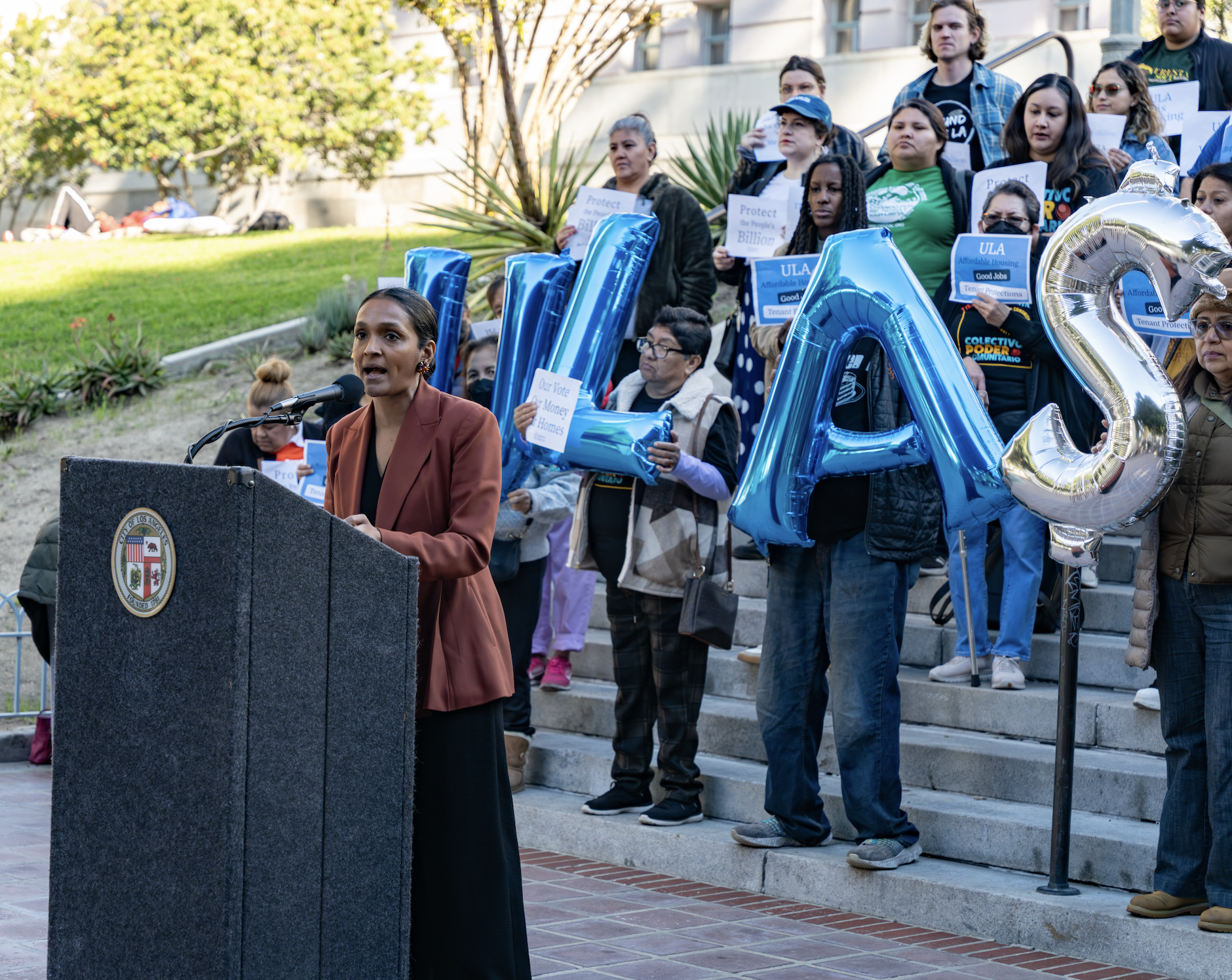
Congrats Mayor-elect Raman!
On behalf of the dozens of organizations who stand together in the United to House LA coalition, we offer heartfelt congratulations on the election of Mayor-elect Nithya Raman.
We share the incoming mayor’s passion for fighting homelessness and keeping people housed. Measure ULA-funded homelessness prevention programs have already kept more than ten thousand Angelenos housed and tens of thousands more can count on that support as we face our housing crisis together. The United to House LA coalition is eager to partner with Mayor-elect Raman to make Los Angeles a global model for social housing and housing justice.
Mayor-elect Raman’s vision of a more affordable, more just, and more thriving Los Angeles has a partner in Measure ULA. Let’s work together to prevent homelessness, build affordable housing, and make Measure ULA the strongest it can be in service of a vision of housing justice for all.
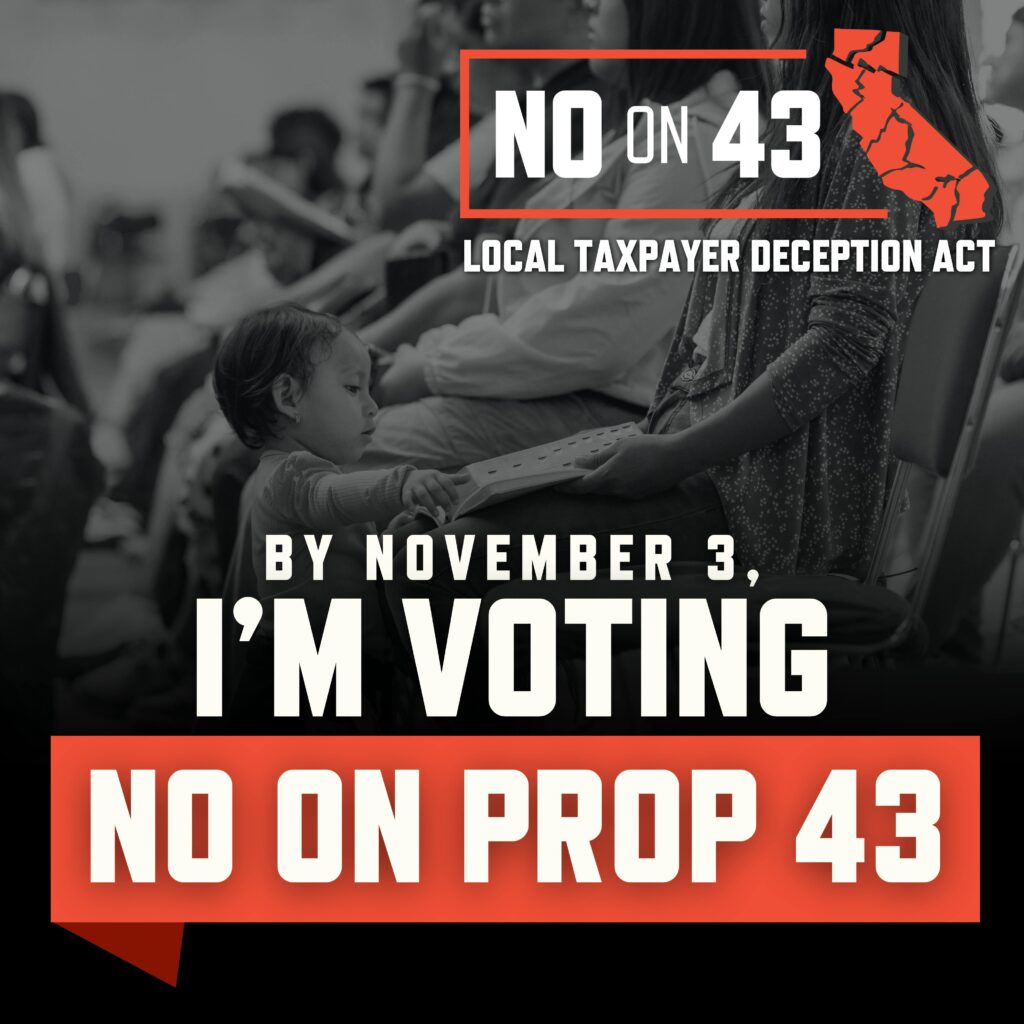
Prop 43’s resounding defeat!
The movement for transfer taxes (like ULA) scored a decisive victory on election night, as Proposition 43 was soundly rejected. At most recent count, Prop 43, which would have stopped California cities from passing new public revenue measures, has met the disapproval of nearly ⅔ of California voters.
Ironically, a near-supermajority of voters has rejected an attempt to raise the bar for collecting new tax revenue to a supermajority. The people saw that giving ⅓ of the electorate veto power over the public good would have been disastrous.
We predicted the measure would be extremely unpopular, but it is a relief to see the latest gambit from anti-tax zealots fall flat.
Congratulations to the opponents of Prop 43 who worked hard to make sure it was defeated, including our ULA coalition, the California Federation of Teachers, and SEIU!

ULA is the foundation of a social housing future.
We want to send a big thank you to Steve Dubb at Shelterforce for his great recent piece about social housing highlighting ULA. In his article, “Can social housing deliver? Los Angeles and Seattle pursue two distinct paths,” Dubb examines how the United States is starting to embrace social housing, using LA and Seattle as case studies.
Dubb says one way to think about social housing is as “permanently and deeply affordable [housing], under community control, that exists outside of the speculative real estate market.” Dubb situates ULA alongside Seattle’s Social Housing Developer, and burgeoning movements in Portland and Chicago, to argue that the US is in the midst of a growing social housing movement. And ULA, Dubb believes, is at the forefront of that movement.
In the piece, Carla De Paz, a ULA coalition leader with Community Power Collective, points out that under ULA, social housing can have a broad meaning. She told Shelterforce that housing can exist outside the market “owned by a public entity, or it can be a nonprofit, an organization, a CLT, [or] an affordable housing developer…”
ULA, Dubb says, embraces this ideal of flexibility in not seeking “to set up a separate social housing authority like Seattle, but rather to add funds to the existing housing system in a way that encourages development or preservation of more social housing.” From Dubb’s perspective, ULA represents an approach to social housing that is dynamic, and, he hopes, repeatable.
ULA funds a social housing “triad” of programs, each advancing key components of a robust system. The Alternative Models for Permanent Affordable Housing program is a dedicated source for the new construction of innovative social housing communities. ULA’s Acquisition and Rehabilitation program—and specifically the Small NOAH program—supports strategies by social housing partners, such as community land trusts (CLTs), cooperatives and affordable housing developers, working to bring existing housing into community-serving ownership. Lastly, the Capacity Building program funds essential work, now being led by the LA Housing Training Hub (“The Hub”), to elevate the capabilities of all the actors in the social housing ecosystem, from tenants seeking to own their own buildings, to CLTs, developers, and property managers.
The social housing present and future in LA is bright and momentum is building. For instance, the multi-site Linda Vista Project by by Fideicomiso Comunitario Tierra Libre (FCTL) in partnership with Little Tokyo Service Center’s (LTSC) Community Development Corporation, was recently funded by ULA and will create 47 permanently affordable homes across three sites in Boyle Heights. The Hub has been conducting workshops with development partners on tenant governance. The Small NOAH program has a new Fund Administrator, Genesis LA, in place to help facilitate property acquisitions that keep tenants stable and expand the number of homes under the social housing umbrella (see more below).
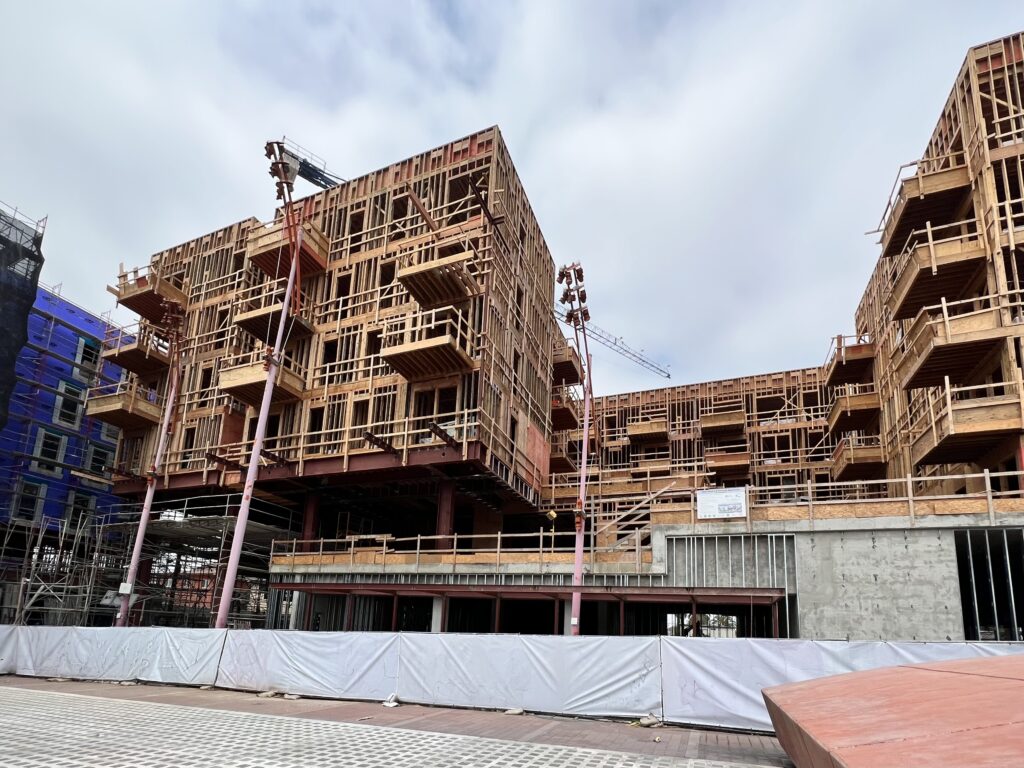
ULA funds flow into the community
ULA funding keeps flowing into L.A. communities, with elements from 2025’s enormous Notice of Funding Opportunity (NOFA) continuing to turn into real housing, and 2026’s opening up for applications.
On October 13th, the Los Angeles Housing Department (LAHD) opened applications for $466 million in affordable housing funding, the Department’s largest solicitation in its history. The Homes for LA NOFA aims to create and preserve affordable housing, prevent homelessness, and support a range of households across the City of Los Angeles. Funding opportunities, made possible through ULA Affordable Housing Funds and other funding sources, will support seven unique programs focused on affordable housing production, preservation of affordable housing, and stabilizing existing affordable housing through operating assistance. Additionally, LAHD has added a roadmap for new models that will encourage a framework of portfolio stabilization, homeownership, and mix-income developments. Finally, there will be funding available to support social housing models that will emphasize tenant governance, permanent affordability, and mixed-income developments.
“This NOFA represents a historic moment for the Los Angeles Housing Department and the City of Los Angeles by offering funding not just for new construction but also for housing preservation and stabilization, while creating a path to homeownership,” said Tiena Johnson Hall, General Manager of the Los Angeles Housing Department. “Thanks to United to House LA and the voters who made this possible, we can move the needle in a meaningful way for Angelenos to have safe, affordable housing available to them.”
Additionally, the $102 million Small Naturally Occurring Affordable Housing (Small NOAH) Program, focused on acquisition and rehabilitation of buildings with 3-20 units, made a big step forward last month with the approval of a fund administrator by City Council. “Naturally occurring affordable housing” refers to non-deed-restricted homes that are still relatively affordable to lower-income tenants, and this program funds the purchase of buildings that are at risk of losing their affordability due to neighborhood change or purchase. The program will create a path for community ownership for some properties under the Measure ULA Acquisition & Rehabilitation of Affordable Housing program.
“With the Small NOAH program, we are creating another tool to help keep Angelenos housed, prevent displacement and give renters a real pathway toward long-term stability,” Councilmember Imelda Padilla, chair of the Los Angeles City Council Housing Committee, said. “This is what Measure ULA is about, investing in programs that our community can access in their own neighborhoods. I’m excited to see these programs take root across all of Los Angeles as we continue raising the standard for affordable housing and homelessness prevention.”
For many small landlords, the Small NOAH program presents an opportunity feared lost—to protect the welfare of longtime tenants while still realizing the value of a family investment asset.
“Housing is a human right, and after years of owning and operating rental housing in South Los Angeles, I have seen how deeply families depend on stable, affordable homes to build their lives, raise their children, and remain connected to their communities,” said property owner Ramtin Rafiee, the owner of more than 100 units throughout South LA that could be purchased for communal ownership under the Small NOAH program. “…I am grateful to be exploring ways to preserve these homes so that the families and communities that give South Los Angeles its strength can remain there for generations to come.
Get the latest news on ULA and ULA-related actions
on Instagram: https://www.instagram.com/unitedtohousela/
on LinkedIn: https://www.linkedin.com/company/united-to-house-la

ULA Resources
- LA Housing Department’s ULA Dashboards
- ULA Citizens Oversight Committee (COC)
- United to House LA Coalition
This newsletter is produced by the United to House LA (UHLA) Coalition that includes over 240 local nonprofit social service providers, community and tenant organizations, labor unions, affordable housing developers, faith-based organizations, and other groups that came together to craft Measure ULA and who have stayed together to make sure that its implementation is carried out effectively and efficiently by the City government.
If someone forwarded this email to you, and you want to sign up, click here.